Focus & Energy · 8 min read
How to cleanse your home with scent and make it feel welcoming
The first thing anyone notices about your home isn't the cushions or the paint colour. It's the smell. Here's why scent shapes how welcome people feel, and how to freshen every room with natural oils, from the hallway to the kitchen
By Lisa · Published 22 June 2026

You've spent the afternoon getting the house ready. The surfaces are wiped, the cushions are plumped and there's something in the oven. Then the doorbell goes, and you suddenly wonder: what does it actually smell like in here?
It's a fair question, and a hard one to answer. After a while, you genuinely can't smell your own home. Your guests can, though, and they notice it in the first few seconds, before they've taken their coat off.
The good news is that you don't need a deep clean or an expensive diffuser in every corner. A home that smells fresh and welcoming comes down to a few simple habits, and the right scent in the right room.
We'll be honest about what scent can and can't do further down. But first, why smell makes such a strong first impression.
Why scent makes the first impression
Smell skips the brain's sorting office. Scent signals go almost straight to the amygdala and hippocampus, the parts that handle emotion and memory. (We go into the wiring in our post on scent and memory.) That's why someone walking into your home feels something about it before they've had time to look around.
Two things are worth knowing:
- You can't smell your own home. It's called olfactory adaptation, or nose blindness. Smell researcher Pamela Dalton at the Monell Chemical Senses Center has explained that your brain tunes out familiar smells so it can notice new ones. That's why you only really smell your house when you come back from holiday. Your guests smell it fresh every time.
- A clean scent makes a space feel clean. In a 2005 study, people sitting in a room with a faint citrus cleaner smell kept their table tidier while eating a crumbly biscuit, without realising the smell had anything to do with it. Citrus, it seems, quietly says "clean" to the brain.
Put those together and you have the case for scenting your home on purpose. You can't judge how it smells by sniffing harder, so it's worth building in a few habits that do the job for you.
Your guests smell your home fresh every time.
Five scents for a fresh, welcoming home
Lemon: the one that says clean
Sharp, bright and instantly fresh. Lemon is the scent most of us link with a freshly cleaned house, and it's brilliant at cutting through cooking smells. It also has some research behind it for lifting mood. Reach for it when: the kitchen still smells of last night's dinner.
Sweet orange: the warm welcome
Juicy, sunny and friendly. Where lemon says clean, sweet orange says come in and sit down. It's the scent of a home where people are pleased to see you. Reach for it when: friends are on their way round.
Spearmint: the fresh lift
Softer and sweeter than peppermint, but still clean and cool. A little spearmint makes a stuffy room feel as if someone has opened a window. Reach for it when: the house feels close after a day with the heating on.
Basil: the kitchen herb
Green and peppery, like tearing leaves over a pasta sauce. Basil sits naturally in a kitchen, so it freshens the room without fighting the food. It also stops citrus from smelling too sugary. Reach for it when: you want the kitchen to smell fresh, not perfumed.
Fresh woods: the outdoors, brought in
Dry, airy woods have a clean, cleared-out quality, like a walk through a forest after rain. They're grounding rather than sweet, which makes them ideal for hallways and bathrooms. Reach for it when: you want a space to feel calm, clean and uncluttered.
We blend every AIRO scent with a job in mind, and four of them were made for exactly this:
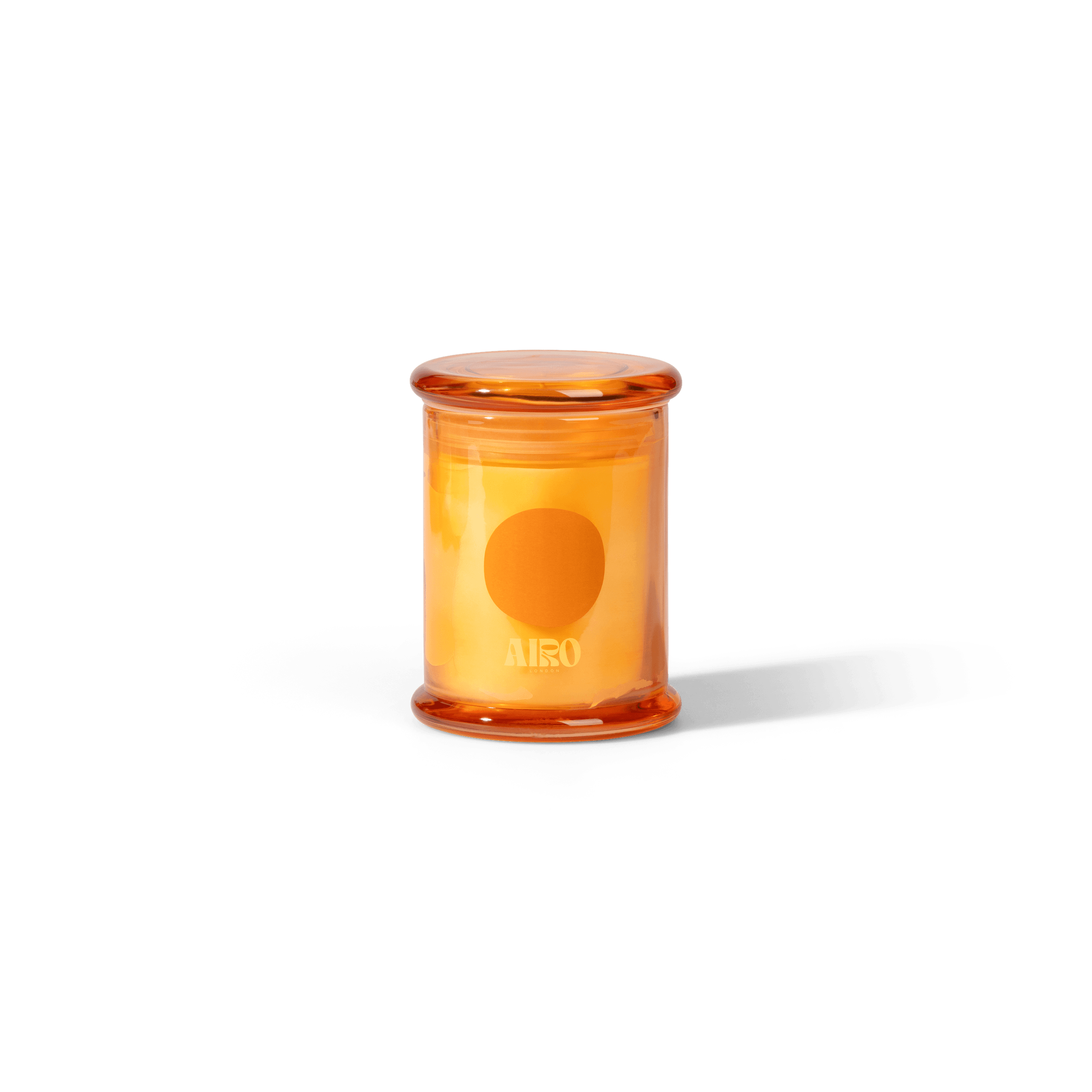
- EAT blends lemon, sweet orange, spearmint and basil. It's made to freshen the kitchen after cooking and get the conversation flowing again after dinner. You'll find it in the EAT candle.
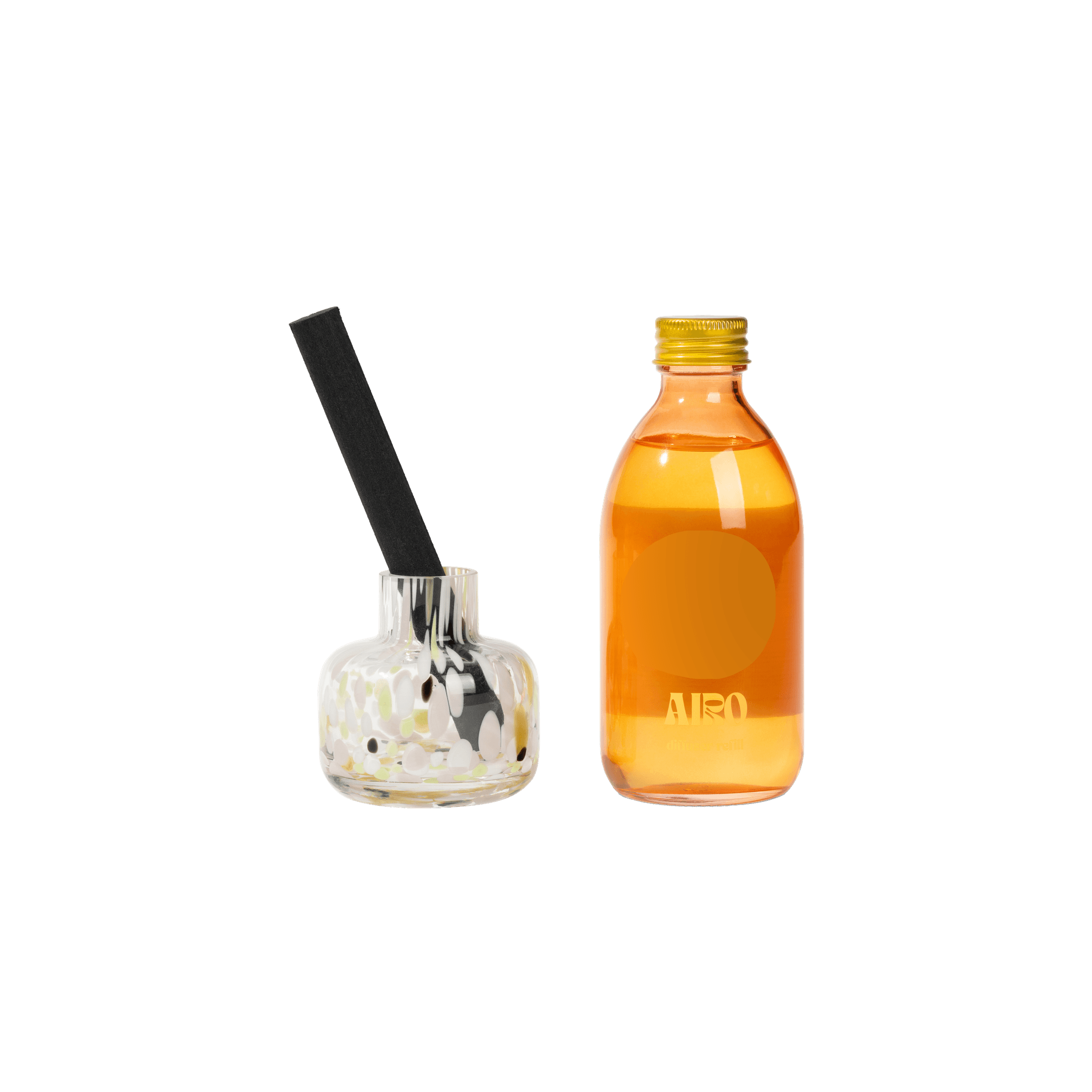
- SMILE brings together bergamot, sweet orange, bitter orange and neroli. Bright and happy, it's the one to light as guests arrive. You'll find it in SMILE: The Happiness Candle and the SMILE diffuser set.
- Alfresco is a woody, fresh-air blend that brings the outdoors in. It works as a room cleanser, so it's ideal in a bathroom or hallway, where most people keep a reed diffuser. You'll find it in the Alfresco diffuser.
- Zest [ZEST: confirm the oils, format and best room, e.g. "Zest blends ___ and ___, and works best in the ___. You'll find it in the ___."]
Every AIRO scent is made with pure essential oils rather than synthetic fragrance, the candles come in handblown glass you can refill, and every sale supports Dementia UK.
If you're new to this: start with the hallway. It's the first thing anyone smells, and one diffuser by the front door makes a bigger difference than candles in every room.
Room by room: how to actually use them
Scent works best when it finishes the job, rather than covering one up. Start with the basics, then add scent room by room.
- Clear the air first. Open the windows for ten minutes, take the bins out and run the extractor fan. Fresh air resets the room, and your nose too. Scent on top of a stale room just makes a stale room that smells of lemons.
- Hallway: the first impression. A reed diffuser by the front door means the first breath anyone takes is a good one. A fresh, woody scent works well here because it says calm and tidy without being too sweet.
- Kitchen: during and after cooking. Don't scent the kitchen while the food is the star, as the two will fight. Once the plates are cleared, light a citrus and herb candle to lift the leftover cooking smells.
- Living room: as guests arrive. Light a bright, happy candle about half an hour before people come round, so the room is ready rather than still filling up when they walk in.
- Bathroom: keep it fresh all day. A diffuser does the steady work. A couple of sprays of room mist before guests arrive gives it a lift.
- Guest room: a quiet welcome. Mist the bedlinen and towels an hour before someone arrives, and let them dry. It's a small detail that people remember.
- One scent per room. Too many different scents competing in one space feels muddled. Pick one per room and let each space have its own character.
- Ask someone else. Because you can't smell your own home, ask a friend what they notice when they walk in. Or step outside for a few minutes and come back in with fresh eyes, and a fresh nose.
A few safety basics
- Never leave a lit candle alone. Busy evenings with guests are exactly when candles get forgotten. Keep them away from curtains, coats, children and pets, and blow them out before you head to bed.
- Think about your guests. Some people are sensitive to strong scents, especially if they have asthma or migraines. Keep scent light and the windows easy to open.
- Think about your pets. Cats in particular are sensitive to some oils, including citrus. Keep rooms aired, and don't shut a pet in with a lit candle.
- Don't put neat oils on skin or surfaces. They can irritate skin and mark some finishes. Mists are diluted for exactly this reason.
- Check first if you need to. If you're pregnant, breastfeeding, have asthma or take regular medication, have a quick word with your GP or midwife.
What the evidence says, honestly
Scent can't clean your home. A candle or diffuser won't kill germs or remove the cause of a smell, so cleaning and fresh air always come first. What scent can do is change how a clean room feels, and lift the smells that cleaning leaves behind, like cooking or a stuffy room.
The research on scent and first impressions is small and mostly comes from lab studies. But the core idea is solid: people notice smell fast, it shapes how they feel about a place, and you're the one person who can't judge your own home's smell.
What scent reliably does is set the tone. A fresh hallway, a bright living room and a kitchen that smells of lemon and basil rather than last night's fish say one thing to anyone who walks in: you're welcome here.

Complete the ritual
Scent can help you uplift & Energise.
SmileRated 5.0 out of 5,7 verified reviews
Smile — Pure, instant lift. SMILE is the fragrance you want in the rooms you use most. Citrusy, bright, and genuinely uplifting. No synthetics, no headaches, just good scent doing good work.
Ingredients
Bergamot
Bright citrus with a soft floral edge. Refreshing and calming at once.
Sweet Orange
Sunny and familiar. Lifts the mood and energises a room.
Bitter Orange
Sharper than sweet orange. Invigorating, and long used to ease stress.
Neroli
Orange blossom. Soothes tension and settles a busy mind.
Mood
Revive
Light, refreshing blends that greet your guests at the door and leave your home feeling clean, energised, and welcoming.
Uplift
Bright, bold, and full of life — uplifting scents that turn an ordinary moment into something worth smiling about. Energising your space and your mood in equal measure.
Benefits
Uplift & Energise
Bright citrus for a quick lift. The scent for mornings, desks and rooms that need waking up.
Reading is free, always. An account just makes the hub remember you.