Sleep & Rest · 7 min read
How to build an evening wind-down routine
A good night often starts an hour before bed. Here's how to create a wind-down routine you'll actually stick to.
By Lisa · Published 22 June 2026

It's 10.45pm. You've just answered one last email, loaded the dishwasher and checked tomorrow's weather. You brush your teeth, get into bed and switch off the light.
And your brain switches on.
Sound familiar? We'd never expect a car to go from 70mph to parked in a second, but that's exactly what we ask of ourselves every night. Your body needs a run-up to sleep. Without one, you're lying in the dark with the day still playing on a loop.
That run-up is what a wind-down routine is for. It doesn't need to be long or fancy. It just needs to be the same small steps, in the same order, most nights.
We'll be honest about what the research does and doesn't show further down. But first, why it works at all.
Why a wind-down routine works
Your body has its own bedtime signals. As evening comes on, your core temperature starts to drop and your brain starts releasing melatonin, the hormone that makes you sleepy. Bright lights, a busy head and a full-on evening can all get in the way of that.
A routine works with those signals rather than against them. Some steps help your body directly. Others work because you repeat them, so your brain learns that this sequence means sleep is coming.
A few studies show how small steps can make a difference:
- A warm bath, at the right time. A 2019 review of 17 studies found a warm bath or shower of 40 to 42.5°C, taken one to two hours before bed, helped people fall asleep faster and sleep better. The warmth draws heat to your skin, so your core cools down afterwards, which is the drop your body needs before sleep.
- Writing tomorrow's list. In a 2018 Baylor University study, 57 people spent five minutes before bed writing either a to-do list or a list of what they'd already done. The to-do list group fell asleep faster, and the more detailed the list, the quicker they dropped off.
- Scent as a cue. Smell is wired almost straight into the parts of the brain that handle emotion and memory. The same scent at the same point every night becomes a signal your body recognises. (We go into the details in our post on scents for sleep.)
Your body needs a run-up to sleep.
A simple five-step wind-down routine
Work backwards from the time you want to be asleep. If that's 11pm, start around 9.30pm. Don't worry about doing every step every night. Even two or three, done consistently, make a difference.
90 minutes before bed: close the day
Spend five minutes writing tomorrow's to-do list. Be specific: "email Sarah about Thursday" rather than "work stuff". Then close the laptop and put the list somewhere you'll see it in the morning. Your brain can stop holding on to it. Why it helps: it gets the to-do list out of your head before it follows you to bed.
60 to 90 minutes before bed: a warm bath or shower
Warm, not scalding. Light a candle on the side of the bath, leave your phone in another room and give yourself twenty minutes. A shower works too if a bath isn't practical. Why it helps: the cool-down afterwards is one of your body's own signals that sleep is coming.
45 minutes before bed: lights down, candle on
Switch off the big light and use lamps instead. Light a calming candle in the room where you'll spend the rest of the evening. Same scent, same time, every night. Why it helps: dimmer light supports your body's sleep hormone, and the scent becomes your cue.
30 minutes before bed: screens away
Put the phone on charge outside the bedroom if you can. Read a book, do a few gentle stretches, chat, or just sit. If you need something to do with your hands, a cup of caffeine-free tea is a good ritual too. Why it helps: fewer late-night notifications means fewer reasons for your brain to switch back on.
10 minutes before bed: mist and blow out
A couple of sprays of room mist on your pillowcase, then blow out the candle. Let the fabric dry for a minute, and get into bed with the scent right where you breathe. Why it helps: the scent carries on doing its job after the candle is out, safely.
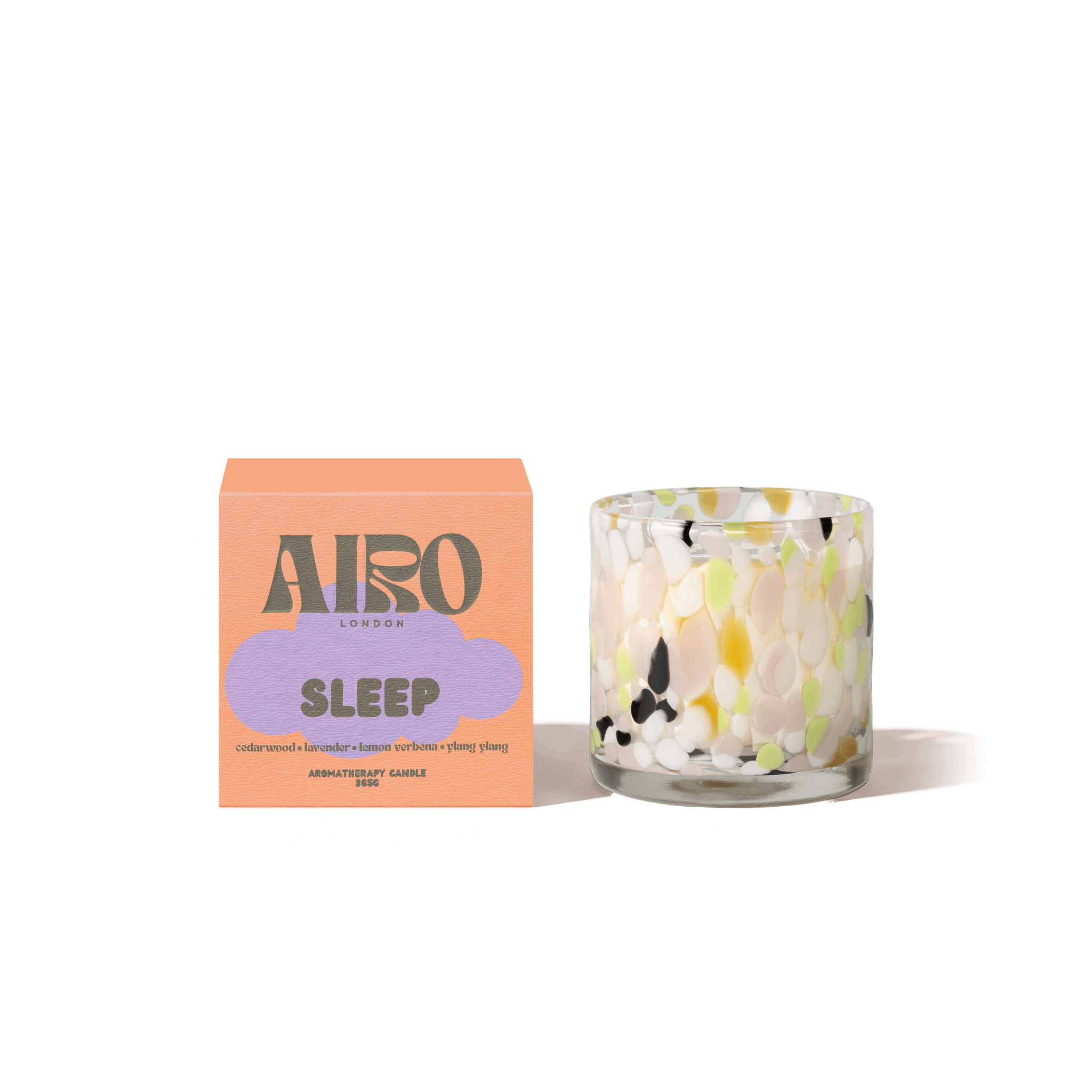
Our SLEEP blend was made for exactly this part of the day. Lavender and ylang ylang soften, cedarwood grounds, and lemon verbena keeps the air feeling light rather than heavy. You'll find it in the Sleep Candle for steps 2 and 3, and the Sleep Room Mist for step 5. If you'd like the full set, the Relaxation gift set brings them together. Our founder Lisa's own favourite moment to light a candle? At home in the evening, once the kids have gone to bed. Every AIRO candle is made with pure essential oils and plant-based wax, in handblown glass you can refill, and every sale supports Dementia UK.
If you're new to this: start with just two steps, the candle at step 3 and the mist at step 5. Once they feel automatic, add another.
Making it stick
The hardest part of any routine is the second week. A few things that help:
- Tie it to something you already do. Light the candle as you switch the dishwasher on, or as the kids' bedroom door closes. An existing habit is the easiest hook for a new one.
- Keep the kit where you'll use it. Candle in the room where you spend the evening, mist on the bedside table, notepad by the kettle. If you have to go looking, you won't.
- Keep the scent for bedtime only. If the same candle burns while you do your tax return, it stops meaning sleep. Use a brighter scent for the daytime.
- Don't aim for perfect. Late nights, sick kids and nights out happen. Pick it back up the next evening. Five nights out of seven is a routine.
- Give it two weeks. Your brain builds the link through repetition, so the first few nights feel like effort. After that, it starts to feel like the evening is doing it for you.
A few safety basics
- Blow the candle out before you get into bed. Never fall asleep with one burning, and keep it away from curtains, children and pets.
- Don't put neat oils on your skin or pillow. They can irritate. Mists are diluted for exactly this reason.
- Keep the bath warm, not hot. If you're pregnant, have a heart condition or low blood pressure, or feel dizzy in hot water, check with your GP first.
- Think about your pets. Cats in particular are sensitive to some oils. Keep the bedroom aired, and don't shut a pet in with a lit candle.
- Check first if you need to. If you're pregnant, breastfeeding, have asthma or take regular medication, have a quick word with your GP or midwife.
What the evidence says, honestly
The research behind each step is real but modest. The bath review pulled together 17 studies, which is reassuring, but many were small. The to-do list study had just 57 young adults, and the researchers themselves said it needs repeating on a bigger scale. Scent research for sleep is small too, and mostly measures how people say they slept.
What a routine reliably does is give the day an ending. For a lot of us, the problem isn't our body. It's that work, screens and worries run right up to the moment the light goes off. A wind-down routine puts a gap there.
If you've been sleeping badly for more than a few weeks, or it's affecting how you get through the day, please talk to your GP. Scent is a support, not a treatment.

Complete the ritual
Scent can help you unwind before bed.
SleepRated 5.0 out of 5,11 verified reviews
Sleep — Better sleep, naturally. Blended with essential oils chosen for their sleep-enhancing properties, this blend helps you wind down, drift off, and wake up feeling human again.


Ingredients
Himalayan Cedarwood
Warm, dry wood. Eases stress, encourages rest and insects dislike it.
Lavender
The classic sleep oil. Calms the nervous system and helps you drift off.
Lemon verbena
Fresh lemon without the sharpness. Eases tension and restless nights.
Ylang ylang
Rich, heady floral. Soothing, softly sedative, and a little seductive.
Mood
Relaxing
Soft, deeply calming blends that gently ease tension from the body and quiet the mind, guiding you through the evening and into a long, restful night's sleep.
Calming
Permission to pause. This blend is an invitation to step back. A delicate, unhurried scent that clears the mind, giving you the rare and precious gift of a moment that is purely, simply yours.
Benefits
Unwind before bed
Lavender and cedarwood, chosen to slow the mind down. Light an hour before bed and let it do the work.
Relax & reconnect
A blend to relax the mind and bring people closer.